How to Start a Drywall Contracting Business
July 2022
Bidmii
Introduction to Starting a Drywall Business

Introduction to Starting a Drywall Business


So you’re ready to start a new drywall business, but where do you start? Starting a drywall contracting business takes more than just business cards and a bank account. As a new business owner, you’ve chosen to embark on a journey that has no guaranteed success or income, but like all entrepreneurs, you’ve decided the risk is worth it. The construction industry is booming, and you’ve got the skill and experience required to operate every square foot of a drywall company — you just need some help in the other areas of running a small business.
Long-term, your drywall company’s success will rely on attracting enough customers and completing enough drywall installation jobs to survive. That sounds more like a job for a marketing specialist or customer service rep, but just like a drywall job, some basic prep work will help make your job a lot easier down the line. You can get started right away, without a complicated marketing strategy, and that’s where Bidmii comes in.
Bidmii helps connect independent contractors with homeowners who need projects done well, and fast. We’re here to help get small businesses like yours off the ground — and the good news is that it’s easier than you think. Below, we cover everything you need to do to launch and grow your business, from your plan, and your cash flow, to getting your first customers, and getting paid. We’ll help provide the knowledge and resources you need to start a successful drywall business, so you can focus on what you do best.
Table of contents
- Business Plan
- Selecting a Business Structure
- Register Your Business
- Create a Website
- Get Insurance
- Municipal Licensing
- Get Your First Customers
- How to Bid on a Project
- Complete the Project and Get Paid
- Build your Profile
Business Plan & Cash Flow
So you’ve decided to start a drywall business — congratulations! On top of your job installing drywall, you’ll also need to be a CEO, CFO, business leader, and sales person, along with several other responsibilities. If you’re serious about your business, you’ll have a basic business plan and cash flow. You should know the basic services you’ll offer, such as the types of drywall you’ll be offering, whether it’s regular drywall, soundproof drywall, fire-resistant drywall, or another type. You should also know where you’ll source your supplies from and how much it will cost, as this will inform how much you’ll charge for your services. Your business plan doesn’t have to be pretty or complicated, but it should lay out your path forward.
One of the biggest reasons your business should have a business plan and initial cash flow is to apply for a small business loan. If you need vehicles, materials, or equipment like lights, fans, or drywall stilts for your business, this will be crucial for you. Your business plan will include a description of your business, the services you will offer, a summary of who is involved and their responsibilities, how you plan to market your services and operate and manage the business, and how much funding you need, if any.
Don’t Forget the Cost of Tools
You might not need office space, but like any trade, you’ll need a selection of tools and equipment in order to complete your jobs. Drywall itself doesn’t require as many hand and power tools as some other trades, but you’ll likely still need to invest in tools and equipment if you’re just starting out. Some of the equipment you'll need may include:
- Extension ladders
- Drywall stilts or scaffolding
- Drywall knives and saws
- Mud pans
- Drywall sanders & sponges
- Drywall lift
- Dust masks
- Drywall square
- Cordless drills & bits
- Fall protection equipment
- Lights & fans
If you’ve been doing drywall work for a while, chances are you have some of this equipment already, but it’s still a good idea to have a list so you can rent the equipment you don’t have if need be. Your next major investment will be your company vehicles and job trailer to haul your equipment. Your company truck and trailer can act as a moving billboard to advertise your business, so it’s worth getting your company logo and phone number on them. This helps build brand awareness and portrays an image of legitimacy and professionalism to your potential customers.
Selecting a Business Structure
A business structure is one of the first decisions you’ll need to make for your professional drywalling business. There are 4 standard types of business structures:
- Sole proprietorship
- Partnership
- Corporation
- Cooperative
Each structure type has different pros, cons, and implications, so you’ll need to choose the one that works best for you. When selecting your business structure, consider your liability. Businesses with higher liability will want to choose a more protective structure, such as a corporation, which costs more than a sole proprietorship but offers benefits such as limited personal liability. Drywall companies may not have as much liability as a General Contractor or Demolition Company, but if you’re in the construction business, your potential liability is higher, so it makes sense to protect yourself and your business from the start. Learn more about choosing your business structure.
Register Your Business
Now that you’ve selected your business structure, you’ll want to get your drywall business registered. Registering your business protects your business name and proves that your company is a legitimate entity, which means that you can do things like hiring employees and completing legitimate work, among other benefits. To register for a business license, you’ll need to provide your business name and structure type, along with information including your address and other details. You’ll also need to pay for your business registration.
Register Your Business in Ontario
Create a Website
In the digital age, if you’re not online, you’re behind. Most owners of small businesses rely on word of mouth and social media to get customers, but a website is a big checkmark that helps to show potential customers that you’re a legitimate company. Your website can be a simple contact page to prove you’re a real business. Many website builders offer a free trial, so you can get a basic website up and running on your own fairly quickly.
Pro Tip: Your Google business profile will be the largest entry point for your business. Start your site there, and you’ll have an online storefront created quickly for less than $20/year.
Don’t get overwhelmed - just get it launched!
Many business owners will put off launching a website for months because it’s not perfect. In the beginning, you won’t get much traffic, so just make a basic website with relevant information and get it online. You don’t need to spend money on a custom designed website. Once you’ve got money coming in consistently, you can invest more in your website. Just be clear about what you offer. For example, it’s a good idea to include information about the types of drywall materials you install. Your customers need to know that your business provides what they’re looking for in order to choose you!
Get Business Insurance
Since you’re in the construction industry, you’ll probably want to consider at least 3 different types of insurance for your drywall business. You’ll need to cover your general liability and consider factors like workplace safety and fall protection. It’s worth reaching out to several different insurance agents for quotes and advice. The types of insurance you may need include:
General Liability insurance: potential damage you may unintentionally create at a client’s property.
Workers' Compensation: potential injuries to you or others while on the job.
Equipment insurance: theft or damage to your tools and equipment.
Additional Licensing
This section mainly applies to general contractors and specific trades, but it’s worth looking into to ensure that your business is operating within the laws and regulations of the region where you’re operating. If a contractor or subcontractor doesn’t have the required permits, it can lead to an entire project being halted, which can damage your relationships with customers and other contractors.
As an example, according to bylaws in the City of Toronto, additional licensing applies to anyone who advertises or solicits for work as a building renovator or building contractor doing renovation work (including altering, repairing, or renovating buildings or structures). This means that if you’re planning to operate a drywall business within the City of Toronto, you may need a work permit from the city. If you’re subcontracting for a home builder or general contractor, they should know if you’ll need a city permit. You can also check with your local municipality if you’re unsure.
Get Your First Customers
The biggest step to starting your drywall company is getting your first customer, but it can quickly become a struggle between competing priorities. Most new business owners are forced to divide their limited time between lining up new projects and completing those they’ve already agreed to. To ensure you have new drywall projects coming in, you’ll need to spend time on marketing and sales activities, on top of managing your job sites. Traditional advertising can cost up to $100 per lead for lawn signs, flyers, and more, which is unrealistic when you’re starting your own drywall business. That’s why we created Bidmii. It’s the cheapest, easiest, and fastest way to get your first customers.
How Bidmii Helps You Earn Your First Customers:
With Bidmii, you’ll lower your business expenses and increase your profitability with one simple tool. You’ll never have to pay for marketing expenses and materials because we’ll provide a direct link to your customers. Just create a free profile, select the types of projects you’re interested in, and receive daily notifications for new projects through SMS and emails that connect you with homeowners in your area. You can immediately start bidding on projects you want, send offers to potential customers, and engage in direct conversations with customers in your area.
How to Bid On a Drywall Project
Bidding on a project is easy and it helps provide upfront insight into your profitability on each project. If you’re just starting out, you may want to seek advice from other professional drywall installers on how to price projects, but in general, you should always make sure you can account for your costs.
Example Project Bid: Drywall Job
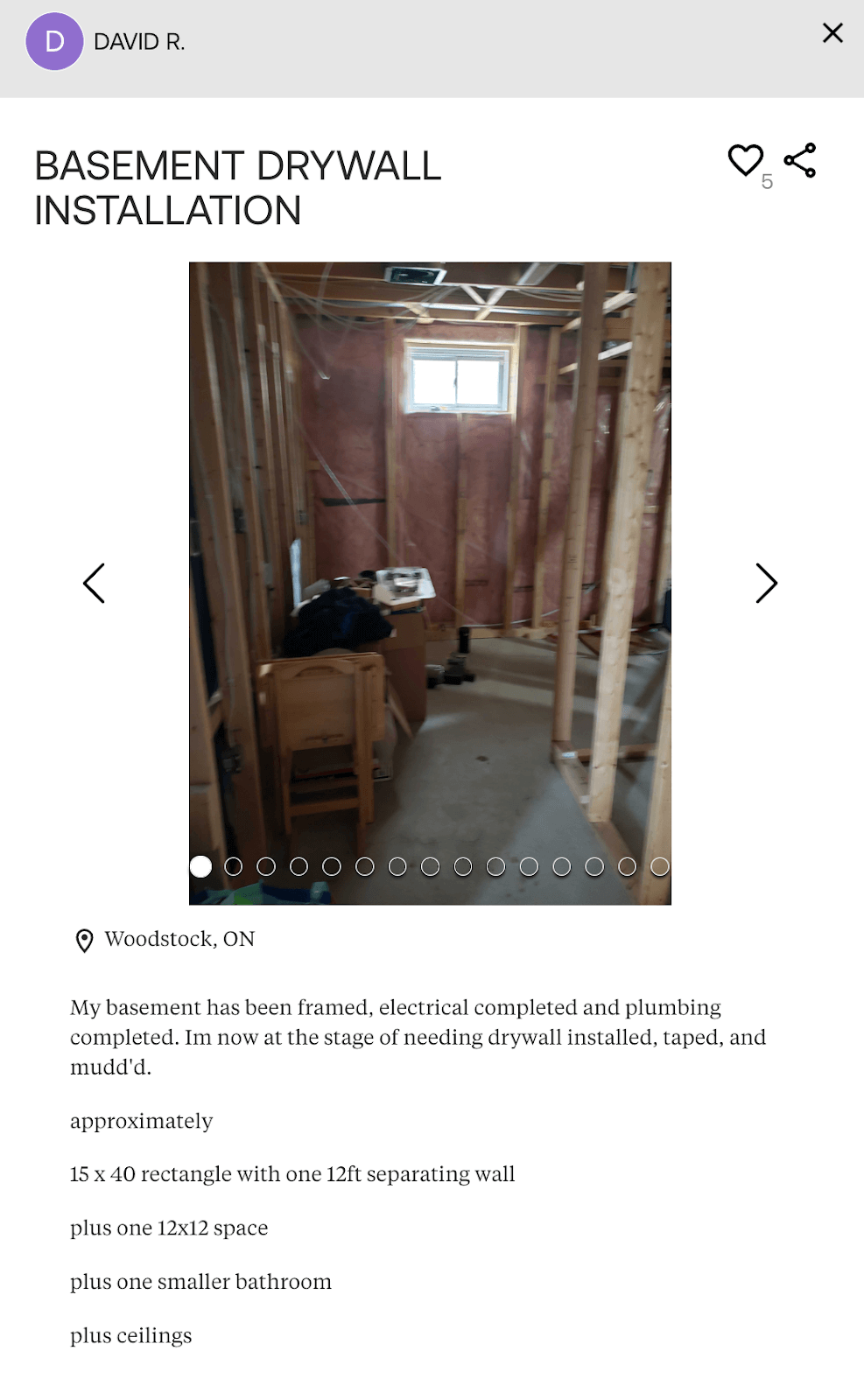
David from Woodstock wants to install drywall in his basement, so he posts a project on Bidmii. You see the email notification on your phone, and decide to put in a bid. You estimate that you will incur around $500 in material costs. With this in mind, you decide to quote the job at $3,500. David accepts the bid, and you’re left with at least $3,000 profit on your first job, and you only spent money out-of-pocket on your business registration, tools, and materials.
Your Proposed Price: $3,500
Equipment & Expenses: $500
Total Profit: $3000
Complete the Project and Get Paid
This is why you’re really here and why you started your drywall business in the first place. With Bidmii, you won’t have to spend your valuable time chasing payments from your customer. You’re protected by our terms and conditions, so you’ll receive payment directly into your account as soon as a project (or project stage) is marked as completed by both parties.
Build your Profile
Congrats! You’ve completed your first project! If you do high-quality work, you’ll be rewarded with honest, verified ratings and reviews from your customers about your completed projects directly on Bidmii. As you grow your business with Bidmii, homeowners will feel more and more confident using your services which will help you compete for more (and bigger) projects.
Want To Build Your Business Using Bidmii?
Bidmii is the fastest, easiest, and cheapest way to earn new customers for your drywall business. We’ll help you find new clients and make lasting relationships with homeowners in your area. By completing projects you’ll earn a strong reputation through ratings and reviews based solely on your skillset and communication.


